
Whitehaven Beach stingers and the seasonal risk
Whitehaven Beach stingers require attention throughout the year. Surf Life Saving Queensland identifies November to May as the typical period of elevated marine stinger risk in tropical Queensland, with occurrences outside those months too. These safety notes reflect Queensland Parks and Wildlife Service and water safety guidance checked on 5 November 2026, including the seasonal notice published on 28 October 2026.
The park's local warnings cover jellyfish, sharks and crocodiles year-round. Choosing another month does not create an animal-free season. Treat the calendar as one part of planning, alongside conditions at the landing, the activity and the crew's instructions. For the weather context, the seasonal planning guide separates rainfall patterns from the conditions affecting a particular boat day.
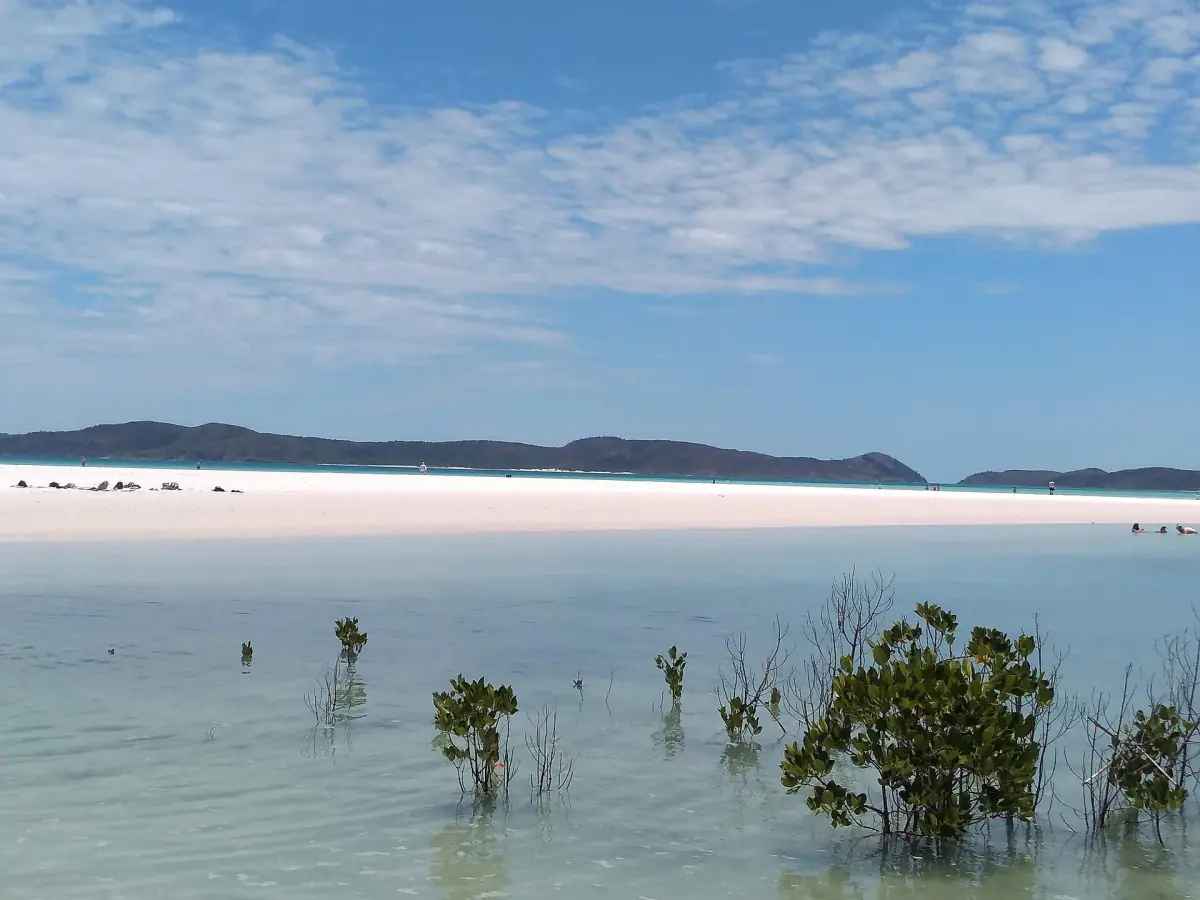
Protective suits and the decision to enter the water
A full-body stinger suit is protective clothing recommended by the park and Surf Life Saving Queensland for water contact. It provides a precaution, rather than complete protection. A flotation aid serves a different purpose from protective clothing, and neither removes the need to assess currents and personal swimming ability. Equipment included with an excursion is therefore a useful practical feature, rather than a promise of safe water.
Queensland Parks and Wildlife Service advises against swimming in its Whitsunday island guidance because of currents, sharks, stingers and crocodiles. Take that warning seriously when choosing what to do ashore. Whitehaven Beach has no lifeguards, and medical help can be hours away. A beach stop can centre on the sand and walking routes; entering the water need not be the purpose of the visit.
Snorkelling itineraries combine the beach with separate reef locations. Read the snorkelling trip guide for that distinction, then consider the actual activity and your swimming ability. Park guidance says not to snorkel or dive alone and to assess local conditions and currents. The presence of other boats is not a substitute for a supervised swimming area.
Hill Inlet currents and rising water
Hill Inlet can have strong currents and rapidly rising water on an incoming or outgoing tide. Exposed sandbars are part of a changing tidal landscape, rather than an invitation to cross the inlet. Keep your visit on the planned shore and walking access instead of trying to reach a viewpoint by wading across moving water.
Lower water can make the sand patterns easier to see, while the park identifies mid to high tide for boat access to the lookout route. These describe different planning questions. Neither a low-water photograph nor the colour of the shallows establishes that the water is safe. The beach and walking guide explains the northern viewpoints and the separate southern beach area.
Crocodile precautions at the water's edge
The park warns of saltwater crocodiles around the Whitsundays. Its precautions include avoiding swimming or wading at dusk and at night, and keeping at least two metres away from the water's edge. Plan shoreline stops and pauses with that distance in mind. Being on an island does not remove the need for these precautions.
These are local precautionary warnings, not a report of a particular encounter at Whitehaven Beach. Keep wildlife observation separate from water activity: watching the inlet from a walking route is a different decision from entering it. Follow local signs and crew instructions rather than using another visitor's behaviour as a guide.
Sun, drinking water and communication
Seek shade and bring at least two litres of drinking water per person per day, as recommended by the park. Treat that amount as a minimum, not a maximum. Campers also need water for cooking and washing. Pack water for the time ashore instead of depending on an opportunity to obtain it after landing, and arrange the visit so that walking and waiting time are part of that plan.
Do not rely on mobile reception at Whitehaven Beach or Tongue Point. The park recommends communication precautions such as a personal locator beacon, an emergency position-indicating radio beacon or a satellite phone. Think through communication before setting off independently, when you can still organise suitable equipment. Local coverage remains essential even with a phone plan or eSIM.
For camping, organise the boat transport before booking the permit and prepare your own food and freshwater supplies. The overnight planning page covers those arrangements. A day excursion and an independent overnight stay place different demands on what you carry, even when both visits use the same stretch of sand.
Our take
This Hamilton departure includes a sunsuit and flotation devices for the visit, without guaranteeing safety.
Hand-picked tours, booked through GetYourGuide. Prices are indicative starting prices in Australian dollars (as of October 2026). Tap a tour for live availability and the current price in your currency.
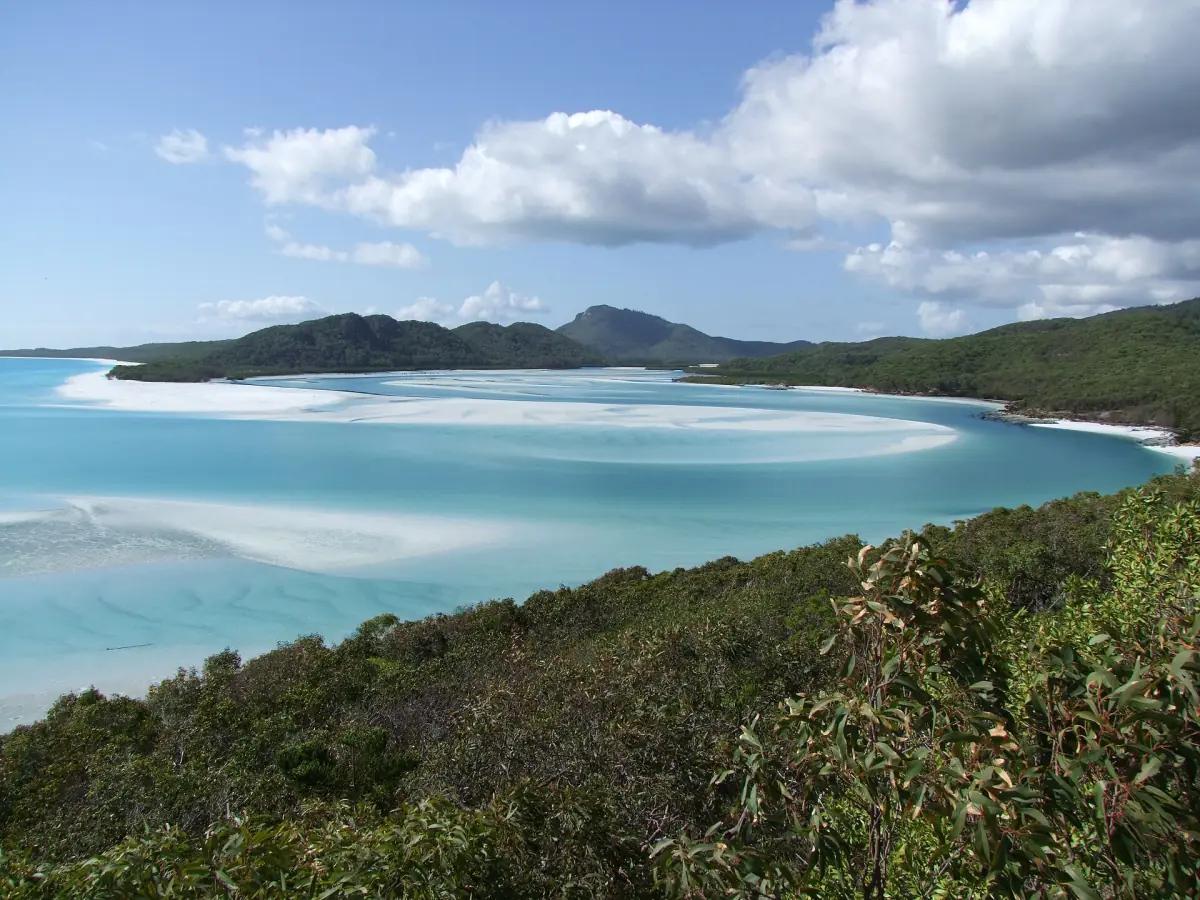
Our take: a Hamilton visit with protective clothing
The Hamilton Island beach and Hill Inlet excursion includes a sunsuit and flotation devices, giving it a practical equipment link to this safety guide.
Water safety questions
Is there a stinger-free month?
Risk is typically elevated from November to May, but stingers can occur outside that period. The park's warnings about marine hazards apply year-round, so planning for another month does not remove the precautions.
Does an included suit guarantee protection?
A suit is protective equipment, not complete protection. The four-hour Hamilton Island excursion includes a sunsuit, flotation devices, a guided national park walk and morning or afternoon tea. Those inclusions do not change the local water warnings.
Does the Hamilton excursion include snorkelling?
This beach and Hill Inlet visit includes protective clothing and flotation devices, with a guided walk. Choose a dedicated snorkelling itinerary if that activity is your priority. See the Hamilton Island departure comparison for the different programmes.